What are the signs that a tripping circuit needs professional electrical troubleshooting?
When a circuit breaker trips, it is doing what it was designed to do. The protective device inside your electrical panel has detected a condition it cannot safely manage, so it opens the circuit to prevent overheating, arcing, or a fire. Most homeowners experience this occasionally. Plug in one too many appliances on a cold morning, and the breaker flips. That is a normal overload, and the fix is often a matter of redistributing the load. But when the same breaker trips repeatedly, or when it behaves in ways that do not match a simple overload, the issue may run deeper. Knowing the difference between a harmless nuisance trip and a symptom of an underlying problem can save you time, money, and frustration. More importantly, it can keep your home safe.
This article walks through the common signs that a tripping circuit has moved beyond a quick reset and now requires professional electrical troubleshooting. It also explains why calling a qualified electrician for help with recurring breaker trips is often the wisest move, especially when the cause is not obvious.
Understanding why breakers trip in the first place
A circuit breaker is a safety switch. It monitors the current flowing through a specific branch circuit. If the current exceeds the breaker's rated ampacity for more than a brief moment, the breaker trips. The same thing happens if it detects a sudden surge caused by a short circuit or a ground fault. Each of these conditions has a distinct signature, and an experienced electrician can often identify the problem just by observing how often the breaker trips and under what circumstances.
Normal overloads are the most common cause. You add a space heater, a hair dryer, and a vacuum cleaner to the same 15-amp kitchen circuit, and the breaker gives out. That is expected. The solution is to move some of those loads to another circuit. But if the breaker trips with only a moderate load, or if it trips when nothing new has been added, something else is going on.
Signs that point to a deeper electrical problem
1. The breaker trips even under light load
If a 15-amp breaker trips when you are running only a few LED lights and a phone charger, the circuit is not overloaded. The issue could be a failing breaker, a loose connection in the panel, or a wiring fault somewhere in the wall. A breaker that has worn out internally may trip at a current far below its rated value. Replacing it is a simple job for a licensed electrician, but it is not something to attempt without proper training. Live electrical panels are dangerous, and working inside one requires knowledge of safety procedures and local codes.

2. The breaker trips immediately after resetting
When you reset a breaker and it trips again the instant you flip it to "on," even with all loads unplugged, you are likely looking at a short circuit or a ground fault. A short circuit happens when a hot wire touches a neutral or another hot wire. A ground fault occurs when a hot wire contacts a grounded surface, such as a metal junction box or the bare copper ground wire. Both conditions create a low-resistance path that allows a massive current surge, which the breaker interrupts almost instantly. This is not an overload. It is a fault that needs professional troubleshooting to locate and repair.
3. The breaker feels warm or hot to the touch
Breakers generate a small amount of heat during normal operation. But if the breaker itself, or the area around it on the panel, feels unusually warm, that can indicate a loose connection, a corroded bus bar, or a breaker that is failing internally. Heat accelerates wear on electrical components and increases the risk of an arc fault. An electrician can use a thermal imaging camera or a contact thermometer to identify hot spots in the panel and determine whether the breaker needs replacement or the problem lies upstream in the service entrance equipment.
4. There are visible signs of damage or burning
Discoloration on the breaker handle, a burnt smell near the panel, or any sign of melting plastic is a red flag. These symptoms usually point to arcing inside the breaker or at the connection point where the circuit wire attaches to the breaker terminal. Arcing generates extreme heat and can easily start a fire. If you see or smell anything that suggests burning, leave the breaker off, and call an electrician immediately. Do not attempt to reset it or inspect the wiring yourself.
5. The breaker trips at random times with no clear pattern
Intermittent tripping is one of the most frustrating signs to diagnose. The breaker might hold for days or weeks, then trip in the middle of the night when almost nothing is running. This can happen because of a loose connection that only faults under certain conditions, such as when the wire heats up and expands, or when a rodent chews through insulation and creates an intermittent short. It can also be caused by a ground fault that only occurs when moisture levels in a basement or crawlspace rise. Chasing down an intermittent fault without specialized test equipment is nearly impossible for a homeowner.
What professional troubleshooting involves
When an electrician responds to a call about a tripping circuit, they do not simply replace the breaker and hope for the best. They methodically test the circuit to identify the root cause. This usually starts with verifying the load on the circuit using a clamp meter. They measure the current draw with all devices running and compare it to the breaker's rating. If the load is within limits, the next step is to check for voltage drop or loose connections at outlets, switches, and the panel.
For short circuits and ground faults, an electrician uses a continuity tester or a megohmmeter to isolate the fault location. This may involve opening junction boxes, pulling wires out of conduit, or inspecting the wiring in an attic or crawlspace. In some cases, the fault is inside an appliance or a light fixture, and unplugging it resolves the issue. In other cases, the wiring in the wall has deteriorated and requires replacement. Professional troubleshooting also includes inspecting the breaker itself. A breaker that has tripped many times over the years can become mechanically weak and trip too easily. Replacing it with a new one of the same rating is a straightforward fix, but only after confirming that the rest of the circuit is sound.
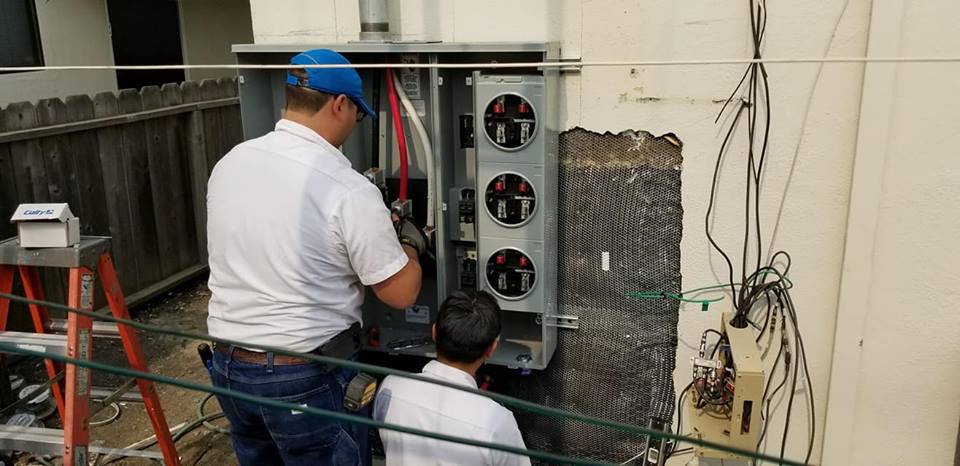
For homeowners who are tired of resetting the same breaker week after week, seeking professional help with recurring breaker trips is the most reliable path to a lasting solution. An experienced electrician can distinguish between a simple overload that just needs load balancing and a hidden wiring fault that could become a fire hazard if ignored.
When to call a professional rather than troubleshoot yourself
Some electrical work is safe for a handy homeowner. Replacing an outlet, installing a light fixture, or running a new cable in an unfinished basement can be done with the power off and a basic understanding of electrical safety. But working inside a live panel, testing circuits under load, and diagnosing intermittent faults are activities that carry real risk of electric shock and arc flash. The National Electrical Code requires certain clearances and working practices that only trained professionals know. Beyond the safety aspect, a misdiagnosis can lead to a temporary fix that leaves the underlying problem in place. The breaker may stop tripping for a while, only to fail again later, possibly at a worse moment.
If you find yourself resetting the same breaker more than once every few months, or if any of the signs above apply to your situation, it is time to call a licensed electrician. They have the tools, the training, and the experience to find the problem quickly and fix it correctly. In many cases, the cost of a service call is far less than the cost of repairing fire damage or replacing damaged electronics.
What not to do when a breaker keeps tripping
There are a few common mistakes that homeowners make when dealing with a tripping breaker. The first is simply upgrading the breaker to a larger size without checking the wire gauge. A 15-amp breaker protects 14-gauge wire. If you replace it with a 20-amp breaker, the wire can overheat and start a fire before the breaker ever trips. Never install a higher-rated breaker unless a qualified electrician has verified that the entire circuit, including the wire, is rated for the higher current.
Another mistake is repeatedly resetting the breaker without investigating the cause. Each time the breaker trips, it undergoes mechanical and thermal stress. Over time, this wears out the internal mechanism, making it more likely to fail when you need it most. If the breaker is tripping because of a ground fault, resetting it multiple times also exposes anyone touching a grounded surface near the fault to the risk of electric shock.

Finally, do not ignore the problem. A breaker that trips occasionally may seem like a minor annoyance, but it is a warning sign. The electrical system in your home is designed to operate within specific parameters. When it strays outside those parameters, the breaker signals that something needs attention. Ignoring that signal is not a long-term strategy.
The bottom line on tripping circuits
A tripping circuit is not always a crisis. Sometimes it is just a reminder to spread the load across multiple circuits. But when the tripping persists, or when it is accompanied by heat, damage, or erratic behavior, the smart response is to bring in someone who can diagnose the system properly. Professional electrical troubleshooting is an investment in the safety and reliability of your home's electrical system. Whether the fix turns out to be a simple breaker replacement or a more involved wiring repair, having a clear answer from a qualified electrician gives you peace of mind and keeps your home running safely.